%201%20(1).png)
Agreee and disagree with design contest
As we all know, a contest refers to a competition where participants strive to outperform others, usually with prizes awarded to the winners. According to Indonesia’s Goods/Services Procurement Policy Agency Regulation №2 of 2021, a ‘contest’ is defined as a competition of ideas or concepts expressed in drafts, writings, designs, and/or other forms based on criteria set out in the competition document. Contests can be organized by government bodies, private companies, non-profit organizations, or even individuals. People are often more willing to participate in contests held by large, reputable companies due to the exposure and valuable grand prizes they offer. However, there are also some downsides.

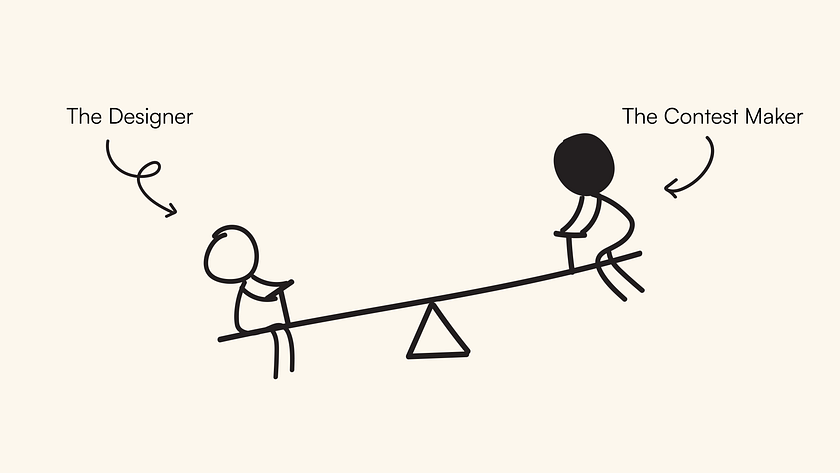
In any contest, there are typically two parties involved. The first is the contest organizer, and the second is the participant, in this case, the designer. The well-known proverb “It takes two to tango” can be applied here, as it illustrates a dynamic relationship between the two parties, much like two people on a see-saw. This type of relationship can lead to either harmony or chaos. To maintain balance, both sides must fulfill their responsibilities — just as a see-saw only works when both parties push equally to keep the game fun and fair. No one wants to be stuck on the low end, and similarly, in contests, no one wants to be in a disadvantageous position. In this scenario, the party on the “upper side” is considered the one who benefits more.
From the designer’s point of view, participating in a design contest comes with several advantages. Winning means receiving the prize and gaining exposure, which could lead to further opportunities. Even if they don’t win, designers still benefit from the experience and the chance to practice and improve their skills. On the other hand, from the contest organizer’s perspective, the benefits seem even greater. Hiring a professional designer typically requires a significant financial investment, but with the same budget, they can hold a contest that attracts numerous participants, each submitting at least one design. With a large number of participants, the contest brief can generate a wide range of ideas, offering fresh insights. Additionally, the contest itself can serve as a promotional tool for the company, especially if it goes viral. For the contest organizer, it’s a cheaper, more insightful, and worthwhile approach.
From the designer’s point of view, there are also significant downsides to participating in contests. These contests can pose various threats, depending on how cautious the designer is. First and foremost, participants should only enter contests organized by reputable and trustworthy companies. It’s important to read the contest requirements carefully to avoid falling into potential traps later on. Designers should also ensure that the organizers don’t change the rules or requirements after the contest has begun.
Each designer has their own motivation for entering a contest — some may be bounty hunters looking to win the prize, others may seek validation for their work, while some may be focused on gaining experience. However, regardless of their motivation, no one wants to be cheated. Unfortunately, design competitions are often associated with fraud and exploitation. There is always a risk that your design or idea may be used without permission, especially if the rules are ambiguous. As a designer, you always have the freedom to decide whether participating in a contest is worth your time and effort.
The downside can also extend to contest organizers. Creating clear and fair rules is not easy, and as the organizer, you must ensure that the rules align with your objectives. You also need to develop a good strategy to attract talented designers to participate. Poorly structured contests can discourage participation or, worse, lead to dissatisfaction and complaints.
In conclusion, there are both advantages and downsides for both parties involved in a design contest. Both the contest organizers and participants must be cautious and responsible in fulfilling their roles. However, if we look at the bigger picture, design contests breathe life into the design community, encouraging creativity and productivity among designers. As long as the contest remains fair and well-structured, it can foster healthy competition and benefit everyone involved.


Our awards & recognitions.














Ready to discuss your project with us?
Chat with Us